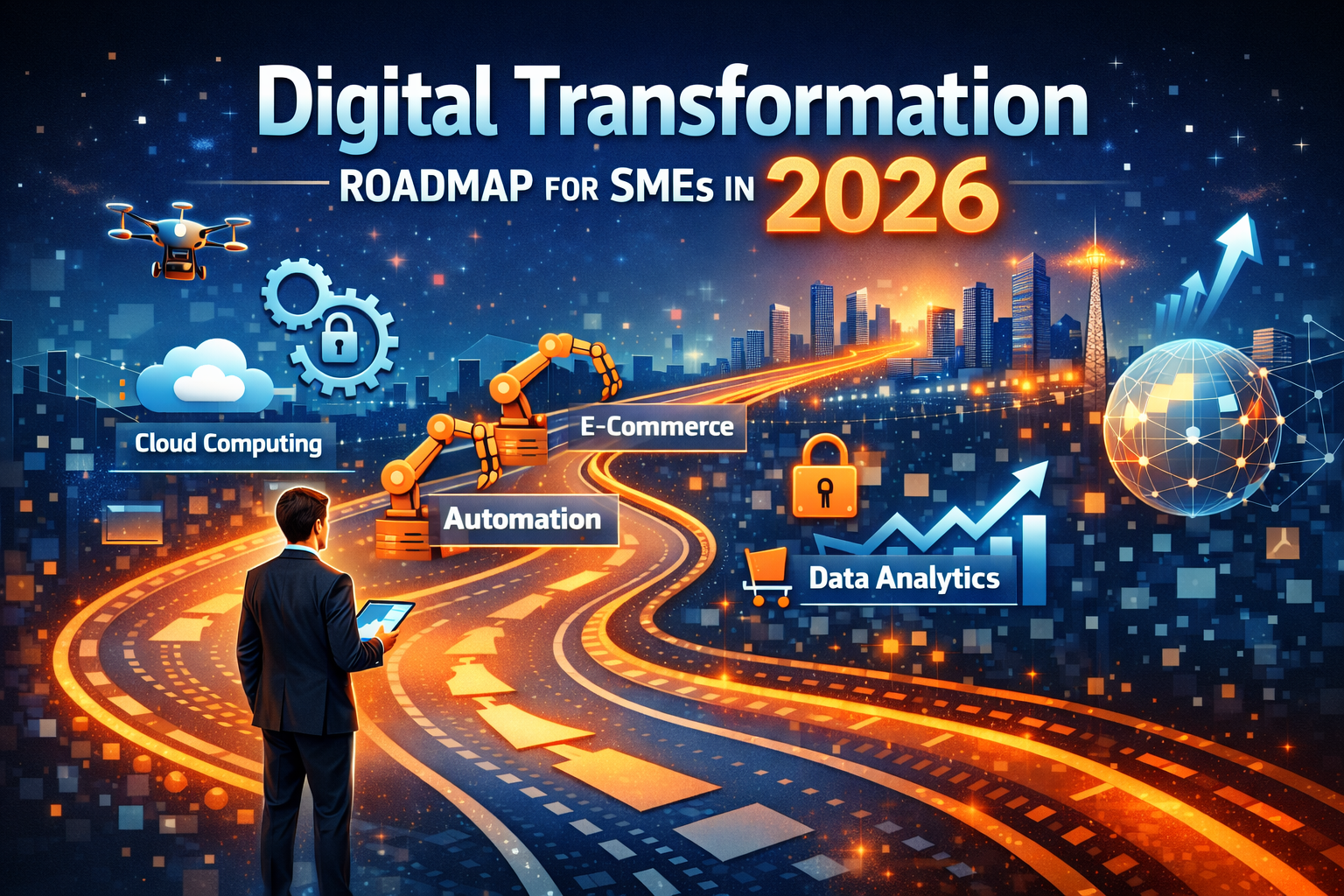
Digital Transformation Roadmap for SMEs in 2026
Date: January 8, 2026, Word Count: Approx. 850
Introduction
In 2026, digital transformation has become a critical requirement for small and medium-sized enterprises (SMEs). Rapid technological advancements, changing customer expectations, and increasing competition have made traditional business models less effective. SMEs that fail to adapt risk falling behind more agile and digitally enabled competitors.
Digital transformation is not about adopting the latest technology trends; it is about using digital tools strategically to improve efficiency, decision-making, and customer experience. This roadmap outlines a practical approach that SMEs can follow to achieve sustainable digital transformation in 2026.
Understanding Digital Transformation for SMEs
Digital transformation refers to the integration of digital technologies across all business functions to improve operations and deliver greater value to customers. For SMEs, this transformation must be cost-effective, scalable, and aligned with business objectives.
Rather than implementing complex systems all at once, SMEs should focus on digitizing core processes, improving data visibility, and building a foundation that supports future growth.
Step 1: Define Business Goals and Strategy
The first step in any digital transformation journey is defining clear business goals. Technology should support strategic objectives rather than drive them.
SMEs should identify:
- Operational inefficiencies that need improvement
- Areas where automation can save time and cost
- Customer experience gaps
- Growth and scalability requirements
A clear strategy ensures that digital investments deliver measurable business value.
Step 2: Assess Current Processes and Systems
Before adopting new technologies, SMEs must evaluate their existing processes. Many businesses rely heavily on spreadsheets, manual approvals, and disconnected systems, leading to errors and delays.
This assessment helps identify:
- Redundant tasks
- Data silos between departments
- Manual reporting challenges
- System limitations
Understanding current gaps allows SMEs to prioritize transformation initiatives effectively.
Step 3: Build a Digital Foundation
A strong digital foundation is essential for long-term success. In 2026, cloud-based platforms play a key role in enabling flexibility and scalability for SMEs.
Core systems typically include:
- Enterprise Resource Planning (ERP) for finance, inventory, HR, and operations
- Customer Relationship Management (CRM) for sales and customer data
- Collaboration tools for communication and productivity
Modular systems allow SMEs to start small and expand as their needs grow.
Step 4: Automate Core Business Processes
Automation is one of the most impactful aspects of digital transformation. By automating repetitive tasks, SMEs can improve efficiency and reduce human error.
Common automation areas include:
- Invoicing and payment processing
- Inventory management and stock alerts
- Purchase approvals and workflows
- Attendance and payroll management
Automation enables teams to focus on strategic and value-added activities.
Step 5: Enable Data-Driven Decision Making
Digital transformation is incomplete without data-driven decision-making. SMEs must move away from assumptions and rely on real-time insights.
Key focus areas include:
- Sales and financial dashboards
- Key performance indicator (KPI) tracking
- Budgeting and forecasting
- Operational performance analysis
Business intelligence tools integrated with core systems help leaders make timely and informed decisions.
Step 6: Ensure Security and Compliance
As SMEs adopt digital systems, data security becomes a major concern. In 2026, protecting business and customer data is essential to maintaining trust and continuity.
Important considerations include:
- Role-based access control
- Secure cloud infrastructure
- Regular data backups
- Compliance with local tax and regulatory requirements
Strong security practices reduce risks and support sustainable digital growth.
Step 7: Focus on People and Change Management
Technology alone does not guarantee successful transformation. Employees play a critical role in adopting and using new systems effectively.
SMEs should:
- Provide adequate training and support
- Communicate the purpose of digital initiatives
- Encourage feedback and continuous learning
- Address resistance to change
A people-focused approach ensures smoother adoption and long-term success.
Step 8: Scale Gradually and Continuously Improve
Digital transformation is an ongoing process. SMEs should implement solutions in phases, measure results, and refine strategies over time.
Best practices include:
- Phased rollouts to minimize disruption
- Regular review of performance metrics
- Continuous system enhancements
- Alignment with evolving business goals
This approach allows SMEs to remain flexible and competitive.
Conclusion
In 2026, a well-defined digital transformation roadmap enables SMEs to operate more efficiently, make better decisions, and scale sustainably. By focusing on clear objectives, strong digital foundations, automation, data insights, and people-centric change management, SMEs can successfully navigate their transformation journey.
Digital transformation is not a one-time project but a long-term strategic investment. SMEs that embrace this approach today will be better positioned to compete and grow in an increasingly digital business landscape.